Facts and Myths About Probiotics
Probiotics are widely available today in pharmacies, shops, and online stores, but their popularity has also led to many oversimplifications. “The more bacteria, the better,” “every Lactobacillus works the same way,” or “probiotics should only be taken after antibiotics” are just some of the common beliefs that can make it harder to choose a product consciously.
In reality, when it comes to probiotics, what matters is not only the presence of bacteria, but above all the specific strain, its quantity, the product form, storage conditions, and the way it is used.
Below, we clarify some of the most common facts and myths about probiotics.
Myth 1. All probiotics are the same
This is one of the most common misconceptions.
The term “probiotic” covers many different microorganisms. Even bacteria belonging to the same species may represent different strains, and their properties do not necessarily have to be identical.
A product label may list the genus and species of the bacteria, but the specific strain designation is also particularly important.
For example:
Lactobacillus acidophilus n.v. Er 317/402 Narine
Lactobacillus indicates the genus, Lactobacillus acidophilus the species, while Er 317/402 identifies the specific strain. Narine is its commonly used name.
Results obtained in studies on one strain should not automatically be attributed to all bacteria belonging to the same species.
Fact: when choosing a probiotic, it is worth checking the full strain designation, not only the bacterial genus.
Myth 2. The more strains a probiotic contains, the better it is
The number of strains alone does not determine the quality of a product.
A preparation containing several or even a dozen different microorganisms is not automatically better than a single-strain product. What matters most is the precise identification of the microorganisms used, their quantity, and the documentation relating to the specific strain or combination of strains.
Probiotics can be either single-strain or multi-strain products. Both forms may have their place, so the length of the ingredient list should not be the main purchasing criterion.
Fact: more strains do not automatically mean a better probiotic.
Myth 3. The best probiotic is the one with the highest CFU count
CFU, or Colony Forming Units, refers to the number of viable microorganisms capable of forming colonies.
The CFU count is an important parameter, but a high number shown on the packaging should not be considered in isolation from the other characteristics of the product.
Other relevant factors include:
- the specific strain,
- the recommended serving,
- the way the product is used,
- the product form,
- additional ingredients,
- product stability,
- required storage conditions.
For this reason, comparing two probiotics only by the number of CFU may lead to misleading conclusions.
Fact: CFU count is important, but it is not the only factor that determines the characteristics of a probiotic product.
Myth 4. Probiotics are available only in capsules
Capsules are one of the most popular forms of probiotic supplements, but they are not the only option.
Products containing live microorganisms may also be available as powders or sachets. The form should primarily match the way the product is intended to be used and the user’s preferences.
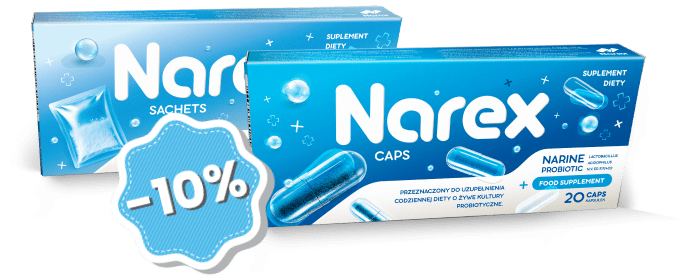
For example, Narex products containing the Narine strain are available both in capsules and sachets. According to the manufacturer’s instructions, Narex Sachets can also be used to prepare a fermented milk product.
Fact: a probiotic does not have to come in capsule form.
Myth 5. Every fermented food is a probiotic
Yogurt, kefir, kimchi, sauerkraut, and other fermented foods may contain live microorganisms. However, this does not mean that every fermented food automatically meets the definition of a probiotic.
To use the term probiotic precisely, the microorganism needs to be appropriately characterized and present in an adequate amount.
For this reason, the terms “fermented food” and “probiotic product” should not be treated as synonyms.
Fermented foods can nevertheless be a valuable part of a varied diet.
Fact: fermented foods may contain live microorganisms, but not every fermented food is automatically a probiotic.
Myth 6. Probiotics and prebiotics are the same thing
The names sound similar, but they refer to two different concepts.
A probiotic contains specific live microorganisms.
A prebiotic is a substrate that is selectively utilized by host microorganisms.
There are also products that combine both components. Such combinations may be described as synbiotics when they meet the relevant criteria.
One example within the Narex range is Narex Duo, which combines the Lactobacillus acidophilus n.v. Er 317/402 Narine strain with inulin.
Fact: probiotics and prebiotics are two different things.
Myth 7. Every probiotic should be taken for the same length of time
There is no single universal duration of use for all probiotics.
Products differ in strain, microorganism count, recommended daily serving, and manufacturer instructions. Therefore, the recommended use of one product should not automatically be applied to another.
The first step should always be to check the product label and follow the recommended serving instructions.
People taking medication, pregnant or breastfeeding women, and people with health conditions should consult a doctor if they have any doubts about using dietary supplements.
Fact: the way and duration of use depend on the specific product and the individual situation.
Myth 8. Every probiotic should be used in the same way during antibiotic therapy
Antibiotic therapy is one of the situations in which consumers often become interested in probiotics, but not all probiotic products should be treated in exactly the same way.
Different microorganisms may react differently to particular substances, so the way a product is used should take into account the specific strain, the preparation, and the manufacturer’s instructions.
There is no single rule concerning timing, the interval between the antibiotic and probiotic, or supplementation duration that can automatically be applied to every product.
If a probiotic is being considered during pharmacological treatment, it is worth checking the instructions for the specific product and, when necessary, consulting a doctor or pharmacist.
Fact: during antibiotic therapy, the specific product and its recommended use matter more than the simple presence of any probiotic bacteria.
Myth 9. Storage conditions do not really matter
Probiotics contain live microorganisms, which means storage conditions may be relevant to maintaining the declared characteristics of the product.
This does not mean, however, that every probiotic has to be stored in the same way. Requirements depend on the specific product and the technology used by the manufacturer.
Some preparations may be stored at room temperature, while others require refrigeration.
The most important rule is therefore to follow the storage instructions provided on the packaging.
The same principle applies to products containing the Narine strain: storage conditions should be checked for the specific product variant.
Fact: storage requirements are one of the parameters worth checking before buying a probiotic.
Myth 10. Narine is the name of all Lactobacillus acidophilus bacteria
Narine is not a general name for Lactobacillus acidophilus bacteria.
It is the commonly used name of a specific strain:
Lactobacillus acidophilus n.v. Er 317/402 Narine.
Different strains may exist within the Lactobacillus acidophilus species, each with its own designation and characteristics.
If a product label lists only “Lactobacillus acidophilus,” this does not automatically mean that the product contains the Narine strain.
The history of Er 317/402 Narine is connected with Armenia and the research conducted by the team of Prof. Levon Erzinkyan. Narex LLC has been developing products based on this strain since 1999.
Myth 11. A probiotic supplement can replace a varied diet
A dietary supplement is intended to complement the daily diet, not replace it.
The microbiota is influenced by many aspects of diet and lifestyle. Dietary variety, adequate fibre intake, and the presence of fermented foods are among the factors worth considering.
A probiotic can be part of the daily diet, but it does not replace balanced nutrition or prescribed medical treatment.
Fact: supplementation should be treated as one element of a broader approach to diet rather than as a substitute for its foundations.
How to choose a probiotic
Instead of focusing only on advertising claims, the number of strains, or the largest CFU value shown on the front of the package, it is worth reading the label carefully.
When comparing products, pay particular attention to:
- Full strain designation – this helps identify exactly which microorganism is present in the product.
- CFU count – this indicates the number of viable microorganisms.
- Recommended daily serving – the number of bacteria in one capsule does not by itself indicate the amount intended for daily use.
- Product form – a capsule or sachet may be more convenient depending on individual preferences.
- Additional ingredients – it is worth checking the complete composition, not only the bacterial strain.
- Storage conditions – particularly in the case of products that require a specific temperature.
- Instructions for use – the recommended method may differ between individual products.
Narine probiotics – one specifically identified strain
Narex probiotic products are based on the strain Lactobacillus acidophilus n.v. Er 317/402 Narine.
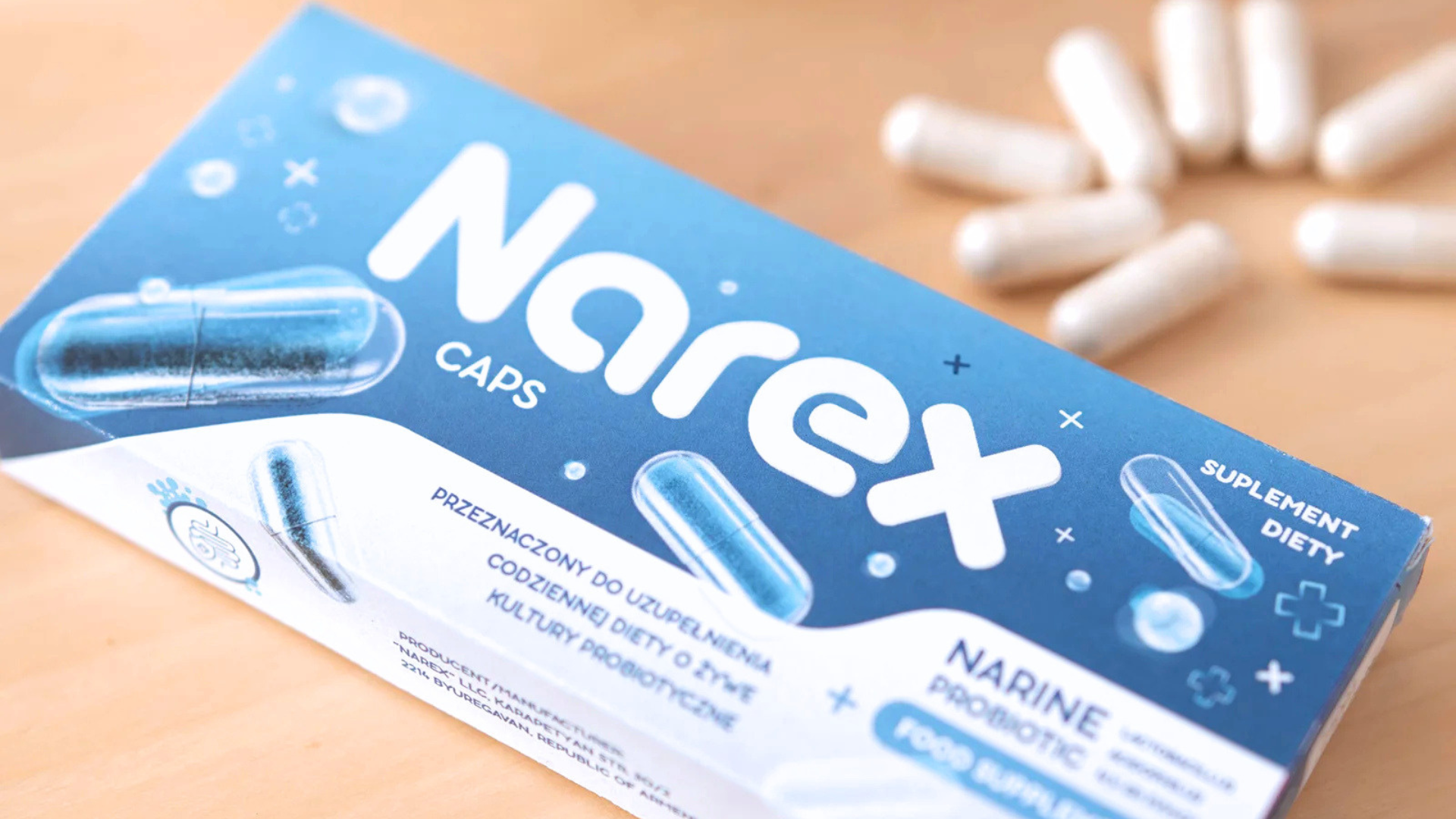
The range includes different variants containing the same strain: Narex Caps, Narex Forte, and Narex Duo in capsule form, as well as Narex Sachets in powder form. The products differ, among other things, in CFU count, form, and additional ingredients.
This makes it possible to compare products based not only on the number of bacteria or strains, but also on the exact microorganism used, its quantity, and the form of the product.
Key facts about probiotics
Choosing a probiotic should not be based on a single number shown on the packaging. What matters is the complete product: the specific strain, its designation, CFU count, serving size, composition, form, storage conditions, and instructions for use.
Not all probiotics are the same, a greater number of strains does not necessarily mean a better product, and not every fermented food is automatically a probiotic.
The most important principle is simple: instead of looking for the “strongest probiotic,” check what exactly the product contains.