Can You Combine Narine Probiotics with Prebiotics? Inulin, FOS and the Gut Microbiota
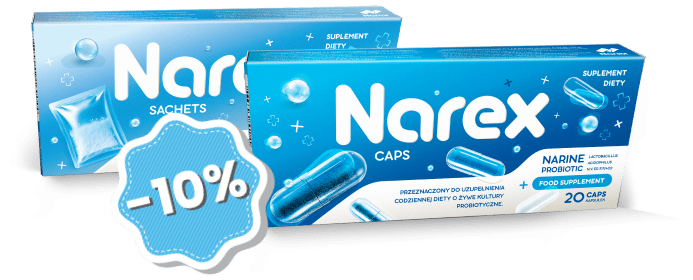
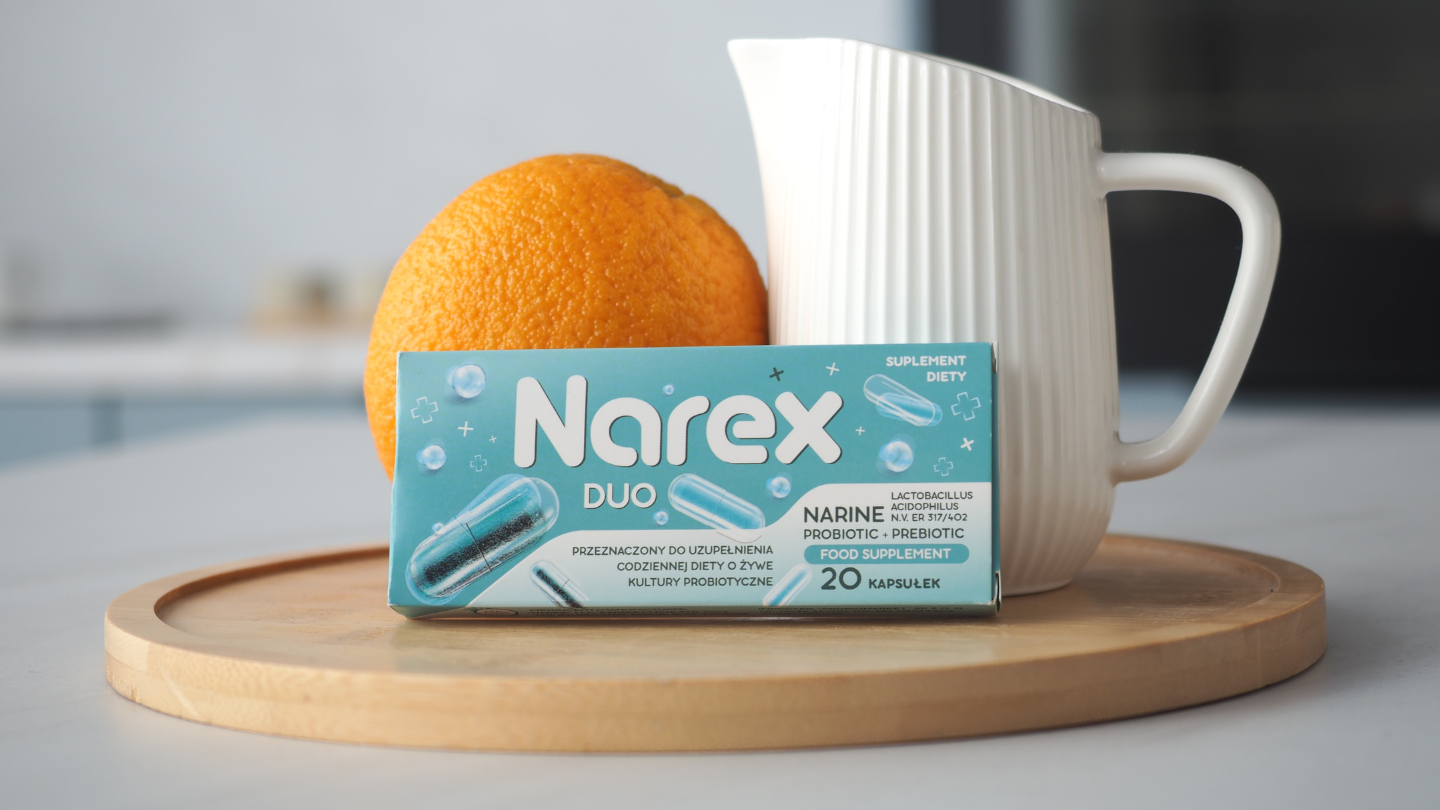
Narine Er 317/402 can be combined with prebiotics such as inulin and fructooligosaccharides (FOS). Prebiotics are substances utilised by specific intestinal microorganisms, and combining them with live bacterial cultures is one approach used in dietary supplementation. Narex Duo is an example of a product that combines the Narine strain with inulin.
Prebiotics play an important role in the gut microbiota. They occur naturally in many plant-based foods, and some are also used as ingredients in food supplements.
How do prebiotics differ from probiotics, how do they work in the intestines, and what is the significance of combining Narine with inulin?
What Is the Difference Between Probiotics and Prebiotics?
Although their names sound similar, probiotics and prebiotics belong to two different categories.
Probiotics are live microorganisms that, when administered in adequate amounts, confer a health benefit on the host. Their properties are associated with specific bacterial or yeast strains.
Prebiotics are substrates selectively utilised by host microorganisms that confer a health benefit. They do not contain live bacteria but provide substances that certain microorganisms can use.
One of the best-known prebiotics is inulin, which belongs to the fructan family.
It is also important to remember that not all dietary fibre is prebiotic. For an ingredient to be classified as a prebiotic, its selective utilisation by microorganisms and the resulting health benefits must be appropriately documented.
How Do Prebiotics Work in the Gut Microbiota?
The gut microbiota consists of numerous groups of microorganisms that utilise different dietary components in their metabolic processes.
Some carbohydrates and dietary fibres are not broken down by human digestive enzymes in the small intestine. As a result, they can reach the large intestine, where they become substrates for specific microorganisms.
Prebiotic Fermentation
During fermentation, intestinal bacteria convert available substrates into various metabolic products.
Among the most important are short-chain fatty acids (SCFAs), including:
- Acetate – one of the main products of microbial fermentation in the large intestine.
- Propionate – a compound involved in the body’s metabolic processes.
- Butyrate – an important energy source for cells lining the large intestine.
The types and amounts of metabolites produced depend on the composition of the gut microbiota, the available dietary substrates, and environmental conditions within the intestine.
This is why prebiotics are an important area of research into nutrition and the gut microbiota.
Can Narine Be Combined with Inulin?
Yes. The combination of Narine Er 317/402 and inulin is used in Narex Duo.
Narine is a specific lactic acid bacterial strain traditionally designated as Lactobacillus acidophilus n.v. Er 317/402 Narine.
Its history is associated with Armenia and the research of Professor Levon Erzinkyan. The strain has been investigated in microbiological studies examining fermentation, antimicrobial activity, and interactions with other microorganisms.
Inulin serves a different function. It is a plant-derived ingredient that can be fermented by selected intestinal bacteria.
Narex Duo combines both ingredients in a single formulation:
Narine Er 317/402 + Inulin
Each capsule contains 1.8 × 10⁸ CFU of live Narine bacterial cultures, together with added inulin.
This formulation combines supplementation with a specific bacterial strain and the intake of a fermentable dietary ingredient.
What Is Inulin?
Inulin is a naturally occurring polysaccharide belonging to the fructan family. It is found in many plants, including chicory root, Jerusalem artichokes, onions, garlic, and leeks.
Its characteristic feature is its resistance to digestion by human enzymes in the small intestine.
Once it reaches the large intestine, inulin can be utilised by specific microorganisms involved in its fermentation.
Research on inulin has investigated its influence on the metabolic activity of the gut microbiota and changes in the abundance of selected bacterial groups, including bifidobacteria.
Narine and Inulin – Why Combine These Ingredients?
Combining specific microorganisms with substances utilised by the gut microbiota is one approach to developing products containing live bacterial cultures.
Such formulations bring together two elements of the intestinal environment: microorganisms and dietary substrates available to them.
Narine provides an identified lactic acid bacterial culture. Inulin, meanwhile, is a source of fermentable carbohydrates utilised by certain intestinal microorganisms.
However, it is important to distinguish between the utilisation of inulin by the existing gut microbiota and its direct utilisation by the administered Narine strain.
Combining Narine with inulin does not automatically mean that inulin is selectively utilised by the Er 317/402 strain itself. Both ingredients may perform separate functions within the intestinal environment.
Is a Combination of Probiotics and Prebiotics a Synbiotic?
In scientific literature, the term synbiotic has a specific meaning.
According to the 2020 consensus statement of the International Scientific Association for Probiotics and Prebiotics (ISAPP), a synbiotic is a mixture comprising live microorganisms and substrates selectively utilised by host microorganisms that confers a health benefit on the host.
Two main types of synbiotics are recognised.
Complementary Synbiotics
These formulations combine a probiotic and a prebiotic, but their activities do not necessarily depend directly on one another.
The prebiotic may primarily be utilised by microorganisms already present in the gut.
Synergistic Synbiotics
In synergistic synbiotics, a particular substrate is specifically selected to be utilised by the microorganism administered alongside it.
Demonstrating this relationship requires appropriate scientific research.
The term synbiotic therefore refers to the demonstrated properties of a specific combination rather than simply the presence of bacteria and a prebiotic in the same product.
In Narex Duo, the defining feature of the formulation is the combination of the original Narine Er 317/402 strain with inulin.
Which Prebiotics Can Be Combined with Narine?
Some of the best-studied prebiotics include certain fructans and galactooligosaccharides.
These ingredients differ in their chemical structure, carbohydrate chain length, and utilisation by microorganisms.
Inulin
Inulin is one of the most extensively studied prebiotics.
Natural sources include chicory, Jerusalem artichokes, onions, and garlic.
It is an ingredient in Narex Duo, which combines inulin with the Narine Er 317/402 strain.
Fructooligosaccharides (FOS)
FOS are a group of short-chain fructans found naturally in plants and also used as ingredients in food products.
They can be fermented by selected intestinal bacteria.
Compared with some longer-chain fructans, they exhibit different fermentation characteristics, partly due to differences in molecular chain length.
Galactooligosaccharides (GOS)
GOS are oligosaccharides used in food products and dietary supplements.
Scientific research has investigated their selective utilisation by certain intestinal microorganisms, particularly bacteria belonging to the genus Bifidobacterium.
Natural Dietary Sources of Prebiotics
Prebiotics are also found in everyday plant-based foods.
Examples of natural sources include:
- Chicory and Jerusalem artichokes – sources of inulin.
- Onions, garlic, and leeks – contain fructans.
- Asparagus – provides different types of dietary fibre, including fructans.
- Certain cereal products – contain fructans and other types of dietary fibre.
A varied diet provides a range of ingredients that can be utilised by different intestinal microorganisms.
Does Taking More Prebiotics Lead to Better Results?
The amount of a prebiotic consumed influences its availability to intestinal microorganisms.
However, a larger serving does not necessarily produce a greater benefit.
Studies involving inulin and FOS use different amounts depending on the study population, the characteristics of the ingredient, and the outcomes being assessed.
There is no single universal daily prebiotic dose suitable for everyone.
How Does the Body Respond to Prebiotic Fermentation?
The fermentation of dietary ingredients by intestinal microorganisms involves the production of gases, among other metabolic products.
This is a natural part of bacterial metabolism.
For some people, larger amounts of fermentable ingredients may cause bloating or a feeling of fullness, particularly when intake is increased rapidly.
For this reason, additional prebiotics can be introduced gradually into the diet, taking individual tolerance into account.
When using ready-made food supplements such as Narex Duo, the manufacturer’s recommended daily serving should be followed.
Can Prebiotics Be Taken Every Day?
Prebiotics occur naturally in many foods and can be consumed regularly as part of a daily diet.
Their dietary intake is primarily associated with eating a variety of plant-based foods.
In food supplements, prebiotics may be included as individual ingredients or combined with live bacterial cultures.
Daily use should take into account the composition of the product, its recommended serving, and the amount of dietary fibre and fermentable carbohydrates already obtained from food.
What Makes Narex Duo Different from Other Narine Products?
All the main Narex probiotic supplements contain the same strain: Lactobacillus acidophilus n.v. Er 317/402 Narine.
The differences between the products concern their form, bacterial count, and additional ingredients.
Narex Duo stands out because it contains inulin, combined with the Narine strain in a single capsule.
The name Duo refers to the two components of the formulation: live Narine bacterial cultures and inulin.
It does not mean that the product contains two different bacterial strains.
For people interested in supplementation combining a specific lactic acid bacterial strain with a prebiotic, Narex Duo is one of the available options within the Narex product range.
Explore Narex Narine Probiotics.
FAQ – Frequently Asked Questions About Narine and Prebiotics
Can Narine Be Taken Together with Inulin?
Yes. Narine and inulin can be used together. This combination is found in Narex Duo, which contains the Narine Er 317/402 strain and inulin.
Is Inulin a Prebiotic?
Yes. Inulin is one of the best-known ingredients with prebiotic properties. It can be selectively utilised by specific intestinal microorganisms.
Does Inulin Directly Feed Narine Bacteria?
Inulin is a substrate utilised by certain groups of intestinal microorganisms. Its inclusion in a preparation containing Narine does not establish that it is directly and selectively utilised by the Er 317/402 strain.
Can Narine Be Combined with FOS?
Yes. FOS are ingredients used in prebiotic supplementation. When combining supplements, their composition and recommended serving sizes should be considered.
What Is the Difference Between Inulin and FOS?
Both belong to the fructan family. They differ in characteristics such as carbohydrate chain length, which can influence how microorganisms ferment them.
Does Narex Duo Contain Two Probiotic Strains?
No. Narex Duo contains one bacterial strain – Narine Er 317/402 – together with inulin.
Do Prebiotics Have to Be Taken at the Same Time as Probiotics?
There is no general requirement to take both ingredients at exactly the same time. Prebiotics may be obtained naturally from the daily diet or included in a combined supplement.
Can Prebiotics Be Consumed Every Day?
Yes. Prebiotics can form part of a daily diet, while supplements containing them should be used according to the instructions for the specific product.
Is All Dietary Fibre Prebiotic?
No. Prebiotics are a specific category of ingredients whose selective utilisation by host microorganisms is associated with a documented health benefit.
Conclusion – Narine and Prebiotics in Daily Supplementation
Combining Narine Er 317/402 with prebiotics such as inulin is one approach to formulating supplements containing live bacterial cultures.
Narine is a specifically identified lactic acid bacterial strain, while inulin is a fermentable dietary ingredient utilised by selected intestinal microorganisms.
Prebiotics participate in processes taking place within the gut microbiota, and their natural sources are found in many plant-based foods.
Narex Duo is an example of a ready-made formulation combining the original Narine Er 317/402 strain with inulin.
Explore Narex Duo and Other Narine Products
This article is intended for educational purposes. Food supplements should not be used as a substitute for a varied diet. Do not exceed the recommended daily serving.
Scientific References
- Gibson G.R. et al. (2017). The International Scientific Association for Probiotics and Prebiotics (ISAPP) consensus statement on the definition and scope of prebiotics. Nature Reviews Gastroenterology & Hepatology. PubMed.
- Swanson K.S. et al. (2020). The International Scientific Association for Probiotics and Prebiotics (ISAPP) consensus statement on the definition and scope of synbiotics. Nature Reviews Gastroenterology & Hepatology, 17, 687–701. DOI: 10.1038/s41575-020-0344-2.
- ISAPP – Prebiotics.
- Narex – Narine Er 317/402 Strain.