What Makes Narin-E Cosmetics Unique? Narine Whey in Skin Care
Narin-E cosmetics stand out for their use of Narine whey, obtained through fermentation involving the Lactobacillus acidophilus Er 317/402 Narine bacterial strain. This distinctive ingredient forms the foundation of their formulations, connecting the long history of an Armenian lactic acid bacterial strain with modern skin care.
Narin-E cosmetics are produced in Armenia, where the Narine strain has been studied for decades. Their formulations incorporate ingredients derived from fermentation and are designed for everyday skin care, moisturising and softening the skin.
What Are Narin-E Cosmetics?
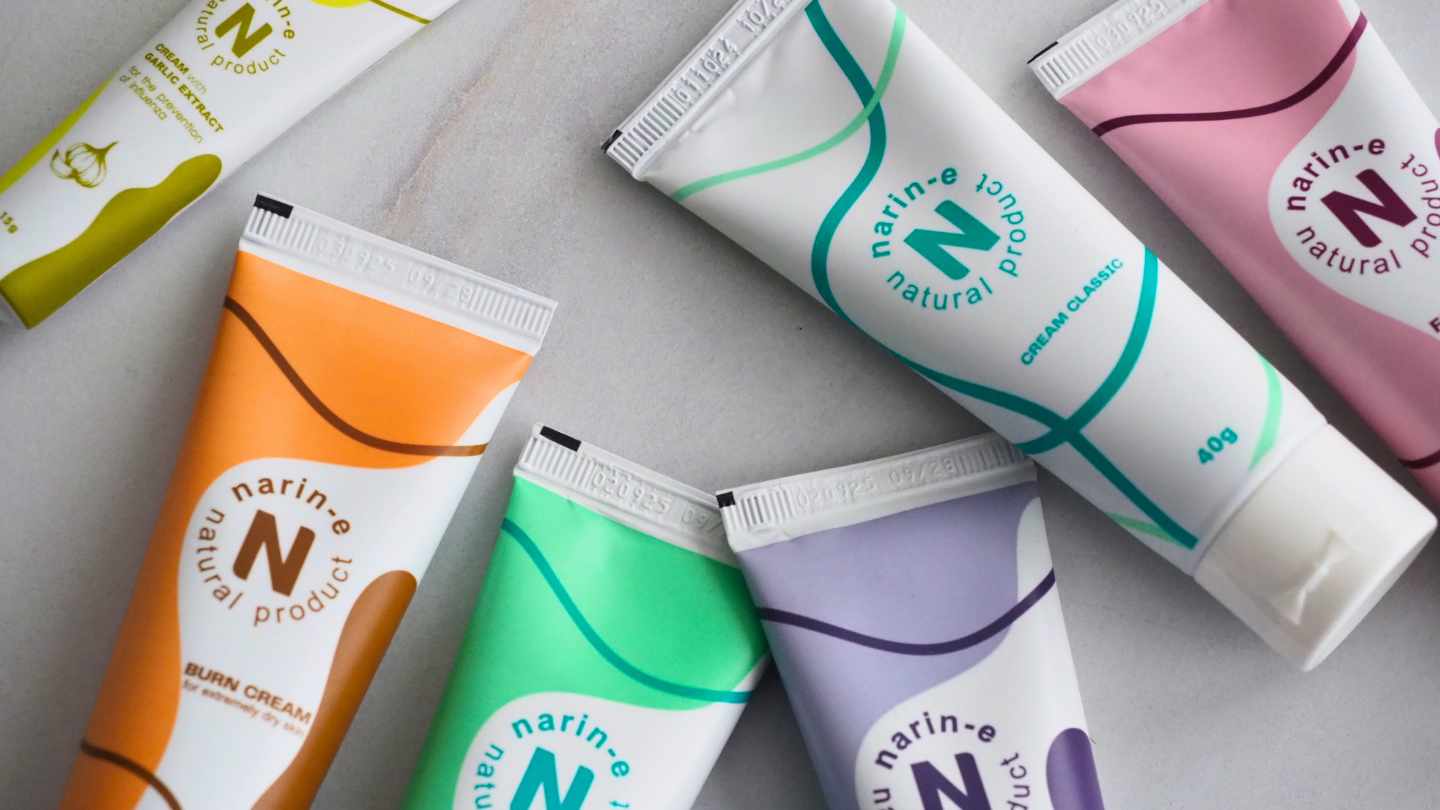
Narin-E Natural Product is a cosmetics line manufactured in Armenia by ESCO-PHARM, which began producing these products in 2005.
The foundation of the cosmetics is Narine whey, associated with fermentation using the Lactobacillus acidophilus Er 317/402 Narine strain.
This strain was isolated in Armenia during research conducted by Professor Levon Erzinkyan and his team. Its history dates back to the 1950s and 1960s.
Narine is a lactic acid bacterium capable of converting certain sugars into lactic acid. During fermentation, bacteria also produce other substances through their metabolic processes, known as metabolites.
The use of whey and fermentation-derived ingredients is a distinctive characteristic of Narin-E cosmetics.
The product line includes cosmetics designed for different stages of daily skin and hair care.
Narine Whey – The Key Ingredient in Narin-E Cosmetics
Narine whey is an ingredient obtained through fermentation involving lactic acid bacteria.
In cosmetic ingredient lists, it appears under the INCI designation:
Whey/Lactobacillus Ferment
This is a characteristic component of Narin-E formulations, used in combination with other skin care ingredients.
What Are Narine Bacterial Metabolites?
Metabolites are substances produced through metabolic processes occurring within microorganisms.
During fermentation, lactic acid bacteria produce lactic acid and other compounds, depending on the microorganism and the conditions under which fermentation takes place.
Narin-E cosmetics use whey containing fermentation products rather than live bacteria intended to colonise the skin.
This approach makes it possible to incorporate fermentation-derived ingredients into finished cosmetic formulations.
What Role Does Narine Whey Play in Skin Care?
Narine whey is one of the main components of Narin-E formulations. It is used in cosmetics designed for everyday moisturising, softening and skin care.
In finished formulations, it is combined with carefully selected cosmetic ingredients, such as emollients and plant-derived substances.
Combining these components makes it possible to create cosmetics with specific textures, intended uses and skin care properties.
What Makes the Production of Narin-E Cosmetics Special?
The production of cosmetics based on fermented ingredients involves several technological stages.
The first stage involves fermentation under controlled conditions, allowing the selected lactic acid bacterial culture to develop and produce metabolic compounds.
The resulting ingredient is then incorporated into a cosmetic formulation alongside substances responsible for texture, skin care properties and the stability of the finished product.
Armenian Technology Using Narine
The technology behind Narin-E cosmetics is associated with the use of metabolic products derived from lactic acid bacteria.
According to the manufacturer’s documentation, the technology was covered by Armenian Patent RA No. 1089, issued in 2002, associated with the work of Professor A. E. Ambartsumyan.
ESCO-PHARM has used this technology to manufacture Narin-E cosmetics since 2005.
In this way, experience gained from Narine fermentation has also found applications in cosmetology.
What Does the INCI List Reveal About Narin-E Cosmetics?
INCI stands for International Nomenclature of Cosmetic Ingredients, the international system used to identify cosmetic ingredients.
On cosmetic packaging, ingredients are generally listed in descending order of their weight when added to the formulation. Ingredients present at concentrations below 1% may be listed in any order after those present at higher concentrations.
One of the most characteristic names appearing in Narin-E ingredient lists is Whey/Lactobacillus Ferment, referring to whey associated with bacterial fermentation.
Narine Whey and Skin Care Ingredients
Cosmetic formulations can combine fermented ingredients with substances serving different purposes:
- Emollients – help soften and smooth the skin while reducing moisture loss.
- Plant oils – provide lipid components used in skin care.
- Humectants – attract and bind water, helping maintain skin hydration.
- Soothing ingredients – used in products designed to care for skin prone to dryness and discomfort.
- Emulsifiers and texture-enhancing ingredients – contribute to the structure, stability and application properties of cosmetics.
The properties of a finished cosmetic product depend on its complete formulation, the proportions of its ingredients and the technology used in its production.
For a detailed comparison of ingredients and intended uses, visit the Narin-E Cosmetics Comparison page.
Narin-E Cosmetics, Probiotics and Postbiotics
Terms such as probiotics, prebiotics, postbiotics and fermentation-derived ingredients are increasingly common in cosmetology.
These terms describe different categories and should not be used interchangeably.
Probiotics are live microorganisms that, when administered in adequate amounts, confer a health benefit on the host.
Prebiotics are substrates selectively utilised by host microorganisms that confer a health benefit.
Postbiotics are preparations of inanimate microorganisms and/or their components that confer a health benefit on the host, according to the scientific definition.
Fermentation-derived ingredients, on the other hand, include substances obtained through processes carried out by microorganisms.
In the case of Narin-E, the formulations are based on Narine whey containing products of bacterial fermentation.
The cosmetics incorporate ingredients produced through the metabolic activity of lactic acid bacteria, which is one of the distinctive elements of their technology.
What Makes Cosmetics Based on Bacterial Fermentation Different?
Fermentation is a biological process that has been used for centuries, particularly in food production.
Today, it is also used in the cosmetics industry to obtain various ingredients for skin care formulations.
During fermentation, lactic acid bacteria transform components of their growth medium, producing organic acids and other metabolic compounds.
The properties of the resulting ingredient depend on the bacterial strain, the composition of the fermentation medium and the fermentation conditions.
The Importance of a Specific Bacterial Strain
Microorganisms belonging to the same species may differ in their fermentation and metabolic properties.
For this reason, identifying the culture used is important in fermentation technology.
In the case of Narin-E, the strain is traditionally designated as Lactobacillus acidophilus n.v. Er 317/402 Narine, originating from Armenia.
This strain has a history spanning more than 60 years of research and use in fermentation processes.
More information about its origins is available on the Narex website.
What Determines the Price of Cosmetics Containing Narine Whey?
The price of a cosmetic product reflects several factors related to manufacturing, ingredients, technology and distribution.
For cosmetics containing fermented ingredients, an important part of production is obtaining the appropriate raw material under controlled conditions.
Manufacturing costs may be influenced by the preparation of microbial cultures, fermentation, further processing of the resulting ingredient and the development of the finished cosmetic formulation.
The quality of other ingredients, packaging production, transportation and distribution also contribute to the final price.
Cosmetic Value and Ingredient Composition
The price of a cosmetic product does not depend solely on the number of ingredients listed on its packaging.
The functions of those ingredients, their proportions and the properties of the finished formulation are also important.
Narin-E cosmetics combine a distinctive fermentation-derived Narine ingredient with formulations designed for specific skin care needs.
The use of Narine whey and the technology behind its production are central elements of the Narin-E cosmetics line.
How to Incorporate Narin-E Cosmetics Into Your Daily Skin Care Routine
The foundation of daily skin care includes appropriate cleansing, moisturising and protection from environmental factors.
Consistency and choosing products suited to individual skin needs are equally important.
Cosmetics containing emollients and moisturising ingredients help maintain skin comfort and reduce feelings of dryness.
Gentle cleansing, meanwhile, helps remove everyday impurities and excess sebum.
Narin-E cosmetics can be incorporated into a regular skin care routine according to skin type, product purpose and preferred texture.
A detailed overview of the ingredients, properties and intended uses of individual products is available on the Narin-E Cosmetics Comparison page.
FAQ – Frequently Asked Questions About Narin-E Cosmetics
What Makes Narin-E Cosmetics Unique?
Their distinctive ingredient is Narine whey, obtained through fermentation involving the Er 317/402 lactic acid bacterial strain. This technology connects the Armenian tradition of using Narine with modern cosmetic formulations.
What Is Narine Whey?
Narine whey is an ingredient derived from fermentation involving Narine bacteria. In cosmetic ingredient lists, it appears under the INCI designation Whey/Lactobacillus Ferment.
Do Narin-E Cosmetics Contain Live Bacteria?
Narin-E cosmetics use whey and metabolic products derived from lactic acid bacteria rather than live bacterial cultures intended to colonise the skin.
Is Narine Whey the Same as a Probiotic?
Narine whey is a cosmetic ingredient obtained through fermentation. Probiotics, by contrast, are live microorganisms that meet specific scientific criteria.
Are Narin-E Cosmetics Suitable for Daily Skin Care?
Yes. The Narin-E line includes cosmetics intended for regular skin and hair care. Directions for use depend on the specific product.
Where Are Narin-E Cosmetics Manufactured?
Narin-E cosmetics are manufactured in Armenia by ESCO-PHARM, which has been developing the product line since 2005.
Where Can I Compare Narin-E Cosmetics?
A full comparison of the available cosmetics, their ingredients and intended uses is available here.
Conclusion – What Makes Narin-E Cosmetics Distinctive?
The defining characteristic of Narin-E cosmetics is their use of Narine whey, obtained through fermentation involving the Armenian Er 317/402 lactic acid bacterial strain.
The technology used to obtain and incorporate bacterial metabolic products was developed in Armenia and is associated with ESCO-PHARM, which has manufactured Narin-E cosmetics since 2005.
Narine whey is a characteristic ingredient in formulations that combine it with substances responsible for moisturising, softening and everyday skin care.
The history of the strain, its origins and the application of fermentation technology make Narin-E a distinctive line of skin care cosmetics.
Compare Narin-E Cosmetics and Explore Their Ingredients at Narex