Narine Er 317/402 – How Does This Probiotic Strain Interact with the Gut Microbiota?
Narine Er 317/402 is a lactic acid bacterial strain with a history spanning more than 60 years. Its properties have been investigated in microbiological and clinical studies. Scientific publications have examined its activity against selected microorganisms, fermentation characteristics, and the effects of preparations containing Narine on specific parameters of the gut microbiota.
The strain originates from Armenia, where it has been used for decades in fermented foods and preparations containing live bacterial cultures. Today, Narine is also available in Narex food supplements manufactured in Armenia.
What makes Narine Er 317/402 distinctive, what does scientific research reveal about its properties, and why is this strain of interest in gut microbiota research?
What Is Lactobacillus acidophilus Er 317/402 Narine?
Narine is the name of a specific lactic acid bacterial strain traditionally designated as Lactobacillus acidophilus n.v. Er 317/402 Narine.
The history of this microorganism is associated with research conducted in Armenia by the team of Professor Levon Akopovich Erzinkyan.
Research on the strain began in the mid-20th century, and an invention concerning Narine was formally registered in 1964. In subsequent years, the bacteria were used in fermented dairy products and later in preparations containing live microorganisms.
In 1973, industrial production of Narine fermented milk began in Yerevan.
An important milestone in the development of modern products came in 1999, when Narex entered into an agreement with the National Academy of Sciences of Armenia concerning the right to use the reference Narine strain.
Why Is the Er 317/402 Designation Important?
Bacteria belonging to the same species may differ in their biological properties.
For this reason, probiotic research focuses on the identification of specific strains rather than solely on the bacterial species.
The designation Er 317/402 connects Narine to its microbiological documentation, research history, and use in particular preparations.
Learn more about the strain’s origins on the Narex website.
How Do Narine Bacteria Interact With Their Microbial Environment?
Lactic acid bacteria participate in metabolic processes that convert certain carbohydrates into lactic acid and other compounds.
The production of lactic acid affects the acidity of the surrounding environment, which is particularly important during fermentation.
However, the properties of individual lactic acid bacterial strains may vary.
Researchers have investigated several characteristic microbiological properties of Narine.
Lactic Acid Production
One of Narine’s fundamental characteristics is its ability to carry out lactic acid fermentation.
During this process, bacteria convert suitable substrates into lactic acid and other metabolic products.
In food technology, this process is used in the production of fermented dairy products.
The production of organic acids may also influence the growth conditions of other microorganisms present in the same environment.
Antimicrobial Activity
Laboratory studies have examined the activity of Narine against selected microorganisms.
In a study published in 2002, Gukasyan and colleagues described the antimicrobial properties of the Narine strain under laboratory conditions.
The researchers observed that the level of antimicrobial activity depended on factors including cultivation conditions, the composition of the growth medium, its acidity, and the age of the bacterial culture.
These findings demonstrate that microbial properties are influenced by both biological characteristics and environmental conditions.
Interactions With Other Microorganisms
The gut microbiota is a complex ecosystem in which bacteria, fungi, and other microorganisms interact with one another.
Microorganisms may compete for available nutrients, influence the chemical conditions of their environment, and produce substances that affect other microbes.
These relationships are among the areas investigated in research involving the Narine strain.
Narine and the Gut Microbiota – What Does Research Show?
Scientific literature includes studies examining the administration of preparations containing Narine and associated changes in selected microbiological parameters.
These investigations have involved different populations, analytical methods, and forms of administration.
1989 Study – Narine Fermented Milk
In 1989, a study investigating the effects of Narine fermented milk on intestinal microflora was published in the journal Klinicheskaya Meditsina.
The study involved 58 patients with functional and inflammatory conditions of the large intestine. Researchers analysed microbiological changes associated with the consumption of the fermented product.
The authors reported favourable changes in the assessed intestinal microflora parameters.
This publication represents an early example of human research involving Narine.
The study examined a fermented dairy product containing bacteria and their metabolic products rather than modern Narex capsules.
2017 Study – Narine and Escherichia coli
In 2017, a study concerning the strain designated Lactobacillus acidophilus INMIA 9602 Er-2 strain 317/402 was published in Letters in Applied Microbiology.
Researchers investigated the growth of Escherichia coli bacteria isolated from participants with familial Mediterranean fever.
A mathematical model was used to describe the growth dynamics of the bacteria being studied.
Changes in selected E. coli growth parameters were observed following the administration of a preparation containing Narine.
The study provided information about possible interactions between the administered strain and microorganisms naturally present in the intestines.
2018 Study – Narine and Gut Microbiota Composition
Another publication investigated the administration of a commercial Narine preparation to individuals with familial Mediterranean fever who were in remission.
Researchers assessed changes in the abundance of selected groups of intestinal microorganisms, including enterobacteria, lactobacilli, and the yeast Candida albicans.
The results indicated changes in certain microbiological parameters following administration.
This study provides an example of research examining Narine in the context of the human gut microbiota.
2021 Study – Narine and Prevotella Bacteria
A study published in Probiotics and Antimicrobial Proteins in 2021 investigated the relationship between Narine administration and the presence of bacteria belonging to the genus Prevotella in the gut microbiota.
The researchers analysed changes in selected microbiological parameters among individuals with familial Mediterranean fever, also considering differences associated with participants’ sex.
The publication demonstrates that scientific interest in the Er 317/402 strain extends to modern investigations of intestinal microbial composition.
What Can We Learn From Research on the Narine Strain?
Scientific publications concerning Narine include both laboratory investigations and studies involving human participants.
Several main areas of research can be identified:
- Fermentation properties and lactic acid production.
- Antimicrobial activity under laboratory conditions.
- Interactions with selected microorganisms.
- Changes in gut microbiota parameters observed in specific study populations.
- The influence of cultivation conditions on bacterial culture characteristics.
Microbiological research helps scientists better understand the strain’s characteristics and behaviour in different environments.
Individual studies, however, investigate specific populations, experimental conditions, and outcomes. Their findings contribute to scientific knowledge about Narine but do not automatically establish therapeutic effects for every supplement containing this strain.
Narine and the Everyday Gut Microbiota
The gut microbiota consists of numerous groups of microorganisms involved in processes occurring throughout the digestive tract.
Intestinal bacteria participate in the metabolism of certain dietary components, the production of various chemical compounds, and interactions with the host’s cells.
The composition of the microbiota is individual and changes in response to many factors.
Diet and Microbiota Diversity
Diet is one of the most important factors influencing the gut microbiota.
Vegetables, fruit, whole grains, legumes, and other sources of dietary fibre provide nutrients that intestinal microorganisms can utilise.
Overall dietary diversity and consistent eating habits also play an important role.
Antibiotics and the Gut Microbiota
Antibiotics are used to treat bacterial infections. Their activity may also affect microorganisms naturally present in the digestive tract.
Changes in the gut microbiota associated with antibiotic treatment are widely investigated in scientific research.
For products containing live bacterial cultures, proper strain identification and adherence to recommended usage instructions are important.
Individual Differences in Gut Microbiota Composition
Every person has a characteristic intestinal microbiota composition.
Its diversity is influenced by factors such as age, diet, living environment, medication use, and lifestyle.
As a result, individual responses to supplementation with live bacterial cultures may vary.
Narine and Fermented Dairy Products
The history of Narine is closely connected to the production of fermented milk.
Lactic acid bacteria play an important role in food technology because they transform components of milk during fermentation.
This process contributes to the acidification of the product and changes in its sensory characteristics.
In Armenia, Narine fermented milk became one of the best-known applications of the Er 317/402 strain.
Today, Narine can be found in dietary supplements and cultures intended for preparing fermented dairy products.
The Narex product range includes sachets containing the freeze-dried Narine strain, which can be used for homemade fermentation according to the manufacturer’s instructions.
How Should Products Containing the Narine Strain Be Used?
Narex products contain the same Er 317/402 strain but differ in their form and declared bacterial count.
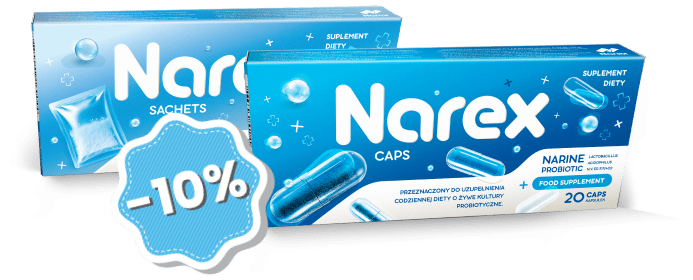
They are available in capsules and powdered sachets.
When selecting a product, it is useful to consider the preferred form, CFU count, and recommended directions for use.
What Does CFU Mean?
CFU stands for Colony Forming Units.
This parameter indicates the number of viable microorganisms capable of forming colonies under suitable laboratory conditions.
The declared bacterial counts per serving in Narex products are:
| Product | Bacterial count |
|---|---|
| Narex Caps | 1.8 × 10⁸ CFU |
| Narex Sachets | 3 × 10⁸ CFU |
| Narex Forte | 2.7 × 10⁸ CFU |
| Narex Duo | 1.8 × 10⁸ CFU |
Narex Duo additionally contains inulin, a type of soluble dietary fibre.
All variants contain the same Narine strain, allowing consumers to select a product according to their preferred form and composition.
Explore Narex Narine probiotics.
How Long Should Narine Be Taken?
For Narex products, the minimum recommended period of use is two weeks, while the recommended supplementation period is at least one month.
The duration may be adapted to individual needs and the instructions for the specific product.
Consistency and adherence to the recommended daily serving are important.
How Should Narine Be Stored?
Narex preparations contain freeze-dried bacterial cultures.
Freeze-drying makes it possible to prepare microorganisms in a dry form and is widely used in manufacturing supplements containing live bacterial cultures.
Narex products should be stored at temperatures up to +8°C, according to the manufacturer’s recommendations.
Narine in Narex Products – The Original Origin of the Strain
Narex is an Armenian manufacturer that has been developing preparations containing the Narine strain since 1999.
That same year, the company entered into an agreement with the National Academy of Sciences of Armenia concerning the use of the reference Narine bacterial culture.
This is an important aspect of the origin of Narex products, connecting the microorganism used in their production with the historical source of the Er 317/402 strain.
In Poland, ProBiomarket Sp. z o.o. is responsible for the import and distribution of Narex products.
Products containing the original Narine strain are available through the official Narex online store.
FAQ – Frequently Asked Questions
Has Narine Er 317/402 Been Scientifically Studied?
Yes. The Narine strain has been investigated in microbiological studies and publications examining antimicrobial activity, fermentation characteristics, and selected gut microbiota parameters. Scientific literature includes historical publications as well as more recent studies from 2017, 2018, and 2021.
Does Narine Influence the Gut Microbiota?
Human studies have investigated changes in selected groups of intestinal microorganisms following the administration of preparations containing Narine. These include observations involving enterobacteria, Escherichia coli, and bacteria belonging to the genus Prevotella. The findings relate to the populations and preparations investigated in those studies.
Is Narine the Same as Lactobacillus acidophilus?
Narine Er 317/402 is a specific strain traditionally classified as Lactobacillus acidophilus. The designation Er 317/402 distinguishes it from other strains and connects it to its scientific documentation.
Is Narine Used in Milk Fermentation?
Yes. The use of Narine in fermented dairy products has a long history. Industrial production of Narine fermented milk began in Armenia in 1973.
Can Narine Be Taken After Antibiotic Treatment?
Narex products containing Narine are food supplements intended to be used according to the instructions on their packaging. During or after antibiotic treatment, it is advisable to discuss the supplementation schedule and timing in relation to medication with a doctor or pharmacist.
How Long Should Narine Be Taken?
The minimum recommended period of use for Narex products is two weeks, while the recommended supplementation period is at least one month. Longer-term use can be adapted to individual needs and the manufacturer’s recommendations.
Does a Higher CFU Count Mean a Better Probiotic?
CFU count is one of the parameters used to describe a product. Strain identity, formulation, product quality, and directions for use are also important. A higher bacterial count does not automatically mean greater effectiveness.
Does Narine Have an EFSA-Approved Health Claim?
In the European Union, health claims concerning food are subject to specific regulatory procedures. EFSA is responsible for scientific assessments, while authorisation decisions are made at the EU level. There is no separately authorised health claim for the Narine Er 317/402 strain. This concerns the regulation of food-related health claims and is distinct from the existence of microbiological research on the strain.
Where Can I Buy Original Narine Er 317/402?
Narex products containing the Narine Er 317/402 strain are available through the official Narex online store and the distributor’s retail partners.
Conclusion – What Do We Know About Narine and Its Interaction With the Gut Microbiota?
Narine Er 317/402 is a lactic acid bacterial strain with a long history of use in Armenia, whose properties have been investigated in laboratory research and studies involving human participants.
Scientific publications describe its antimicrobial activity under specific conditions, fermentation characteristics, and changes in selected gut microbiota parameters observed following the administration of Narine-containing preparations.
Modern research demonstrates that scientific interest in this strain also includes the investigation of interactions among different groups of microorganisms inhabiting the digestive tract.
Narex products contain the Narine Er 317/402 strain associated with the original reference bacterial culture originating from Armenia.
Explore Narex Products Containing the Original Narine Er 317/402 Strain
This article is intended for educational purposes. Food supplements are not a substitute for a varied diet or medical treatment prescribed by a healthcare professional.
Scientific References
- Ambartsumian K.F. et al. (1989). The effect of the acidic milk mixture “Nariné” on intestinal microflora in patients with functional and inflammatory bowel diseases. Klinicheskaya Meditsina, 67(7), 72–74. PubMed – PMID 2811219.
- Gukasyan G.B. et al. (2002). Antibiotic properties of Lactobacillus acidophilus, “Narine” strain, and the ways for their improvement. Zhurnal Mikrobiologii, Epidemiologii i Immunobiologii. PubMed – PMID 12525004.
- Pepoyan A.Z. et al. (2017). Lactobacillus acidophilus INMIA 9602 Er-2 strain 317/402 probiotic regulates growth of commensal Escherichia coli in gut microbiota of familial Mediterranean fever disease subjects. Letters in Applied Microbiology, 64(4), 254–260. DOI: 10.1111/lam.12722.
- Study published in 2018. Probiotic Lactobacillus acidophilus Strain INMIA 9602 Er 317/402 Administration Reduces the Numbers of Candida albicans and Abundance of Enterobacteria in the Gut Microbiota of Familial Mediterranean Fever Patients. PubMed – PMID 29997616.
- Pepoyan A.Z. et al. (2021). The Effect of Immunobiotic/Psychobiotic Lactobacillus acidophilus Strain INMIA 9602 Er 317/402 Narine on Gut Prevotella in Familial Mediterranean Fever: Gender-Associated Effects. Probiotics and Antimicrobial Proteins, 13, 1306–1315. DOI: 10.1007/s12602-021-09779-3.
- Narex – Narine Er 317/402 Strain, Origin and Documentation.