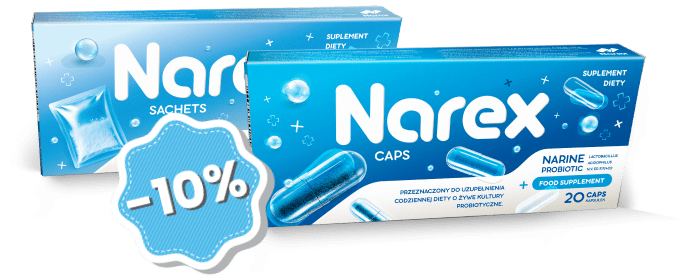
Effect of the Dietary Supplement “Narine” on Intestinal Microflora
Based on studies conducted in a group of patients suffering from various gastrointestinal disorders, with a focus on intestinal dysbiosis, it was clearly demonstrated that the use of the preparation “Narine” provides significant clinical benefits. The study results showed that in the vast majority of patients, improvement occurred within 10–15 days of treatment. This confirms the high effectiveness of the preparation in restoring the balance of intestinal microflora.
In 75.8% of the examined patients, correction of dysbiosis was achieved in just 10 days, with the first positive effects visible as early as the fifth day of therapy.
The most important conclusions of the study include:
- Effectiveness in treating dysbiosis – “Narine” proved to be more effective than other preparations such as bifikol, achieving faster and more lasting results.
- Improvement of intestinal microflora – in 96.6% of patients, either complete normalization of intestinal microflora or significant positive changes in its composition were observed.
- Different response depending on the severity of dysbiosis – milder forms of dysbiosis (D1) were corrected more effectively in a shorter period (5–10 days), while more severe cases required longer therapy (up to 25 days).
- Improvement in patients’ overall well-being – together with the normalization of microflora, improvements were observed in clinical symptoms, endoscopic examination results, and the overall psychological condition of patients, indicating a comprehensive positive impact of the therapy.
These results demonstrate that the preparation “Narine” may be an important element of therapy in the treatment of dysbiosis and other gastrointestinal disorders. Its use both orally and in the form of microenemas provides long-lasting and stable effects.
Below is the full translation of the clinical study results describing in detail the methodology, findings, and conclusions regarding the use of “Narine” in the treatment of patients.

Effect of the Dietary Supplement “Narine” on Intestinal Microflora
Intestinal Dysbiosis – Context and Significance
Intestinal dysbiosis is a condition characterized by a disturbance in the balance of intestinal microflora caused by changes in the bacterial composition of the gut. It is a common pathology, particularly in the context of the excessive use of various medications, especially antibiotics, which can disrupt the natural balance of bacteria in the intestines.
Under normal conditions, intestinal microflora consists of different types of bacteria that work together to maintain intestinal health and support the immune system. Dysbiosis often accompanies many functional and inflammatory intestinal diseases, including irritable bowel syndrome (IBS), Crohn’s disease, and ulcerative colitis. This condition may worsen the symptoms of these diseases and lead to a deterioration of overall health.
The Importance of Studying Probiotic Supplements
In recent years, there has been growing interest in the use of probiotics to restore the balance of intestinal microflora. Probiotics are live microorganisms that, when administered in adequate amounts, provide health benefits to the host.
The dietary supplement “Narine” (Manufacturer: Narex LLC, Armenia) contains a unique bacterial strain Lactobacillus acidophilus n.v. Er 317/402, which was isolated and developed by the Armenian scientist L. A. Erzinkyan. “Narine” has been used as a probiotic for over 50 years and is considered an effective agent supporting intestinal health.
Study Objective
The purpose of this study was to evaluate the effect of the dietary supplement “Narine” on the composition of intestinal microflora in patients with intestinal dysbiosis.
The study aimed to:
- Examine changes in the number of bifidobacteria and other beneficial bacteria in the intestines.
- Evaluate the reduction of potentially pathogenic bacteria after supplementation.
- Analyze the overall improvement in patients’ health in relation to clinical symptoms.
Study Methodology
Study Design
The study was conducted on a group of 58 patients, divided into two groups: an experimental group and a control group.
The experimental group consisted of:
- 30 patients with functional disorders (irritable bowel syndrome, spastic and atonic constipation, functional diarrhea)
- 28 patients with inflammatory bowel diseases (21 with catarrhal colitis and 7 with non-specific ulcerative colitis)
The control group consisted of 16 patients with different degrees of dysbiosis.
Eligibility Criteria
Patients were qualified for the study based on the following criteria:
- Age 18–65 years
- Diagnosis of intestinal dysbiosis confirmed by microbiological tests
- No treatment with probiotics or prebiotics within the previous 30 days
- Consent to participate in the study and compliance with dietary and supplementation recommendations
Study Procedure
Patient preparation:
Before starting treatment, patients underwent preliminary examinations including health assessment, medical history, and microbiological stool tests to determine the composition of intestinal microflora.
Intervention:
Patients in the experimental group received the dietary supplement “Narine” both orally and in the form of microenemas:
• Orally: 2 capsules daily for 20 days
• Microenemas: 30 ml of solution at 37°C for 5 days
(patients with ulcerative colitis did not receive microenemas)
The control group received other probiotic agents bifikol and colibacterin in doses recommended by physicians.
Monitoring and evaluation:
Patients were monitored throughout the treatment period.
Microflora tests were conducted:
- on day 5, 10, and 15 in the experimental group
- on day 10 and 20 in the control group
Health assessment included clinical examinations, endoscopic examinations, and evaluation of patients’ well-being.
Data Analysis
Microbiological test results were analyzed for changes in:
- bifidobacteria levels
- lactobacteria levels
- potentially pathogenic bacteria
Clinical symptoms and overall patient well-being were also evaluated.
Data were compared between the experimental and control groups to assess the effectiveness of “Narine” compared with other probiotic preparations.
Results and Discussion
Changes in Intestinal Microflora
Before treatment, patients showed:
- a significant decrease in bifidobacteria
- an increase in potentially pathogenic bacteria
| Examination Time | Bifidobacteria in stool culture 10⁻⁸ | Lactose-negative and hemolytic E. coli | Proteus spp. | Other pathogenic Enterobacteriaceae |
|---|---|---|---|---|
| Before treatment | 6.9 | 31 | 24.1 | 34.4 |
| After treatment | 91.4 | 6.9 | 6.9 | 5.1 |
After 20 days of treatment, the following results were observed:
• increase in bifidobacteria from 6.9% to 91.4%
• reduction of hemolytic and lactose-negative E. coli from 31% to 6.9%
• reduction of Proteus spp. from 24.1% to 6.9%
• reduction of other potentially pathogenic Enterobacteriaceae from 34.4% to 5.1%
Improvement in Patients’ Health
In addition to microbiological changes, the study also showed a significant improvement in patient health.
In the experimental group using “Narine”:
- 96.6% of patients experienced either full normalization or major improvement in intestinal microflora
- clinical symptoms such as abdominal pain, bloating, constipation, and diarrhea improved
In the control group using bifikol and colibacterin, positive changes were observed in 75% of patients, but the results were less pronounced and required more time compared with the experimental group.
Discussion
Effectiveness of the “Narine” Supplement
The study demonstrated that “Narine” is highly effective in treating intestinal dysbiosis. Its use leads to a significant increase in beneficial bacteria and a reduction of potentially pathogenic bacteria in the gut.
These findings suggest that “Narine” may be an effective therapeutic support in treating dysbiosis and maintaining intestinal health, particularly in the context of functional and inflammatory bowel diseases.
Comparison with Other Probiotics
Compared with other probiotic preparations such as bifikol and colibacterin, “Narine” demonstrated faster and more pronounced normalization of intestinal microflora.
This may result from the unique properties of the strain Lactobacillus acidophilus n.v. Er 317/402, which shows strong antagonistic activity against pathogens and the ability to rapidly colonize the intestine.
Clinical Significance
The use of “Narine” may benefit patients suffering from intestinal dysbiosis, especially in cases where conventional treatment methods do not produce the expected results.
The supplement may also be used preventively to maintain healthy intestinal microflora, particularly during periods of increased risk of imbalance, such as antibiotic therapy or stress.
Conclusions
- The dietary supplement “Narine” is effective in the treatment of intestinal dysbiosis.
- Its use leads to significant improvement in intestinal microflora composition and overall patient health.
- “Narine” demonstrates greater effectiveness compared with other probiotics such as bifikol and colibacterin.
- The use of “Narine” provides broad clinical benefits.
- Improvements were observed in clinical symptoms including abdominal pain, bloating, diarrhea, and constipation, along with normalization of intestinal microflora in most patients.
Different forms of administration:
Both oral and rectal administration (microenemas) produce long-lasting and stable therapeutic effects.
Scientific Basis
Basis of Analysis
The analysis was based on studies available on the website narine.su/klinicheskie-issledovaniya, which provides detailed information on intestinal dysbiosis and the effectiveness of the supplement “Narine”.
In most cases (80%), correction of dysbiosis with the help of “Narine” was achieved within 10–15 days.
These effects were observed based on:
- changes in intestinal microflora
- clinical and endoscopic data
- overall patient well-being
References
Pietrowska W.G., Marko O.N., Human Microflora in Health and Disease, Moscow, 1976, pp. 141–156.
Pinegin B.W., Maltsev V.N., Korshunov V.M., Intestinal Dysbiosis, Moscow, 1984.
Epstein-Litvek R.W., Bacteriological Diagnostics of Intestinal Dysbiosis – Methodological Guidelines, Moscow, 1977.
Kim S.D., Korneva T.K., Hanina G.I., Problems of Proctology, Moscow, 1984, Issue 5, pp. 71–74.
Suzdaltsev A.A., Scientific Works of the Military Medical Faculty, Kuibyshev Medical Institute, 1979, No. 8, pp. 73–74.
Nazarov L.U., Sarkisyan W.G., Research Institute of Proctology, Ministry of Health of Armenia, USSR.
This material was prepared based on available source materials provided by Narex LLC (Armenia) and other publicly available scientific information. The content is informational in nature and does not constitute medical advice or therapeutic recommendations. Any decisions regarding the use of probiotics, including “Narine”, should be made after consultation with a qualified medical professional.