
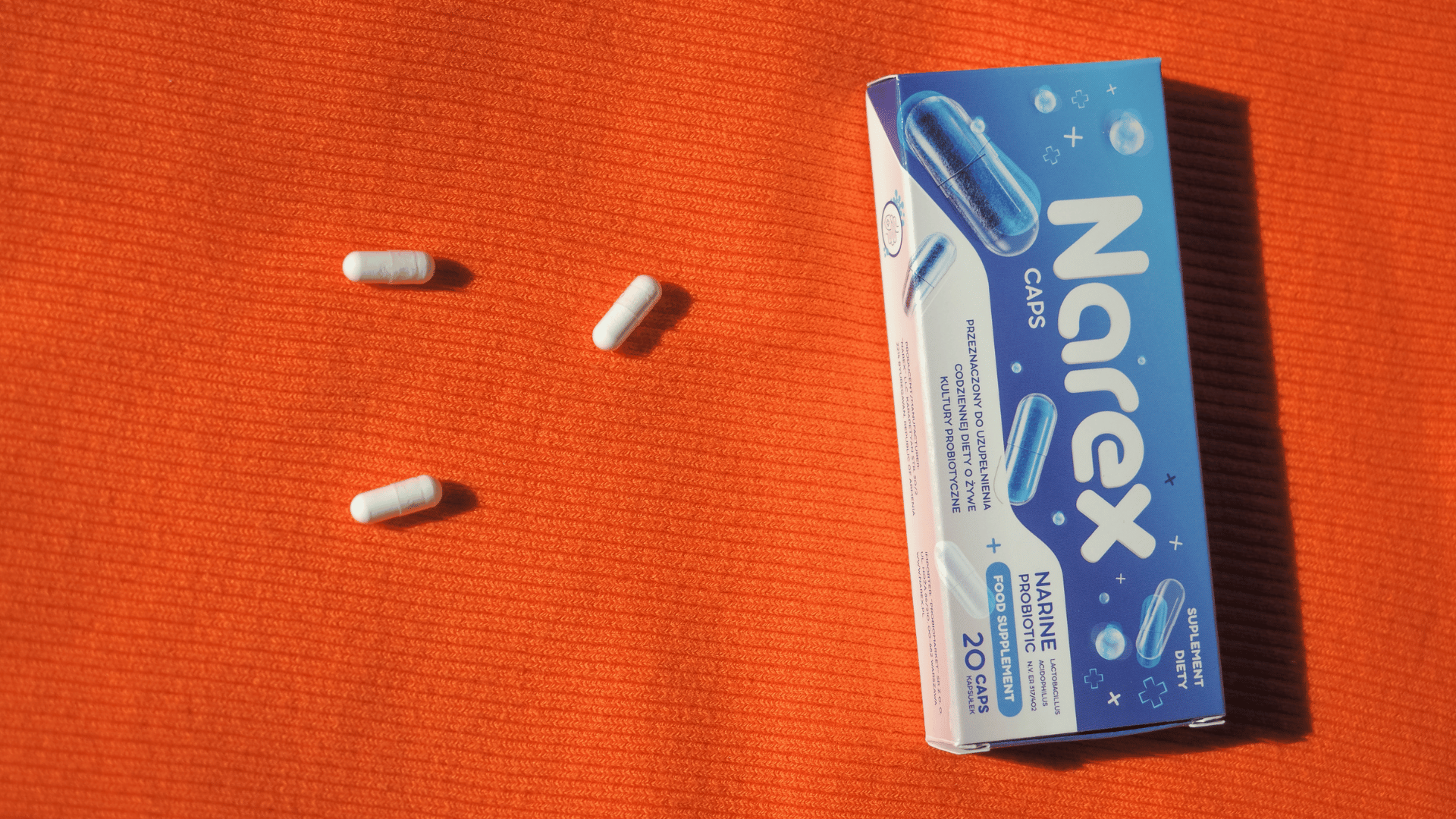
Facts and Myths – What Do We Really Know About Bacteria That Support Gut Health?
Probiotics are live microorganisms which, when consumed in appropriate amounts, may provide beneficial effects for the human body. Most commonly they include lactic acid bacteria and certain types of yeast that naturally occur in the digestive tract. Their presence helps maintain the balance of the gut microbiota, a vast ecosystem of microorganisms inhabiting the intestines.
Modern lifestyles, fast daily routines, stress, and diets low in fermented foods have led many people to take an interest in probiotics as a way to support gut health. They are often associated with a wide range of potential benefits, including improved digestion, support for immune function, and even effects on mood. As their popularity grows, however, many simplifications and misunderstandings have also appeared. To better understand what probiotics are and how they may influence the body, it is useful to examine the most common facts and myths surrounding them.
MYTH: All probiotics work in the same way
One of the most widespread misconceptions is that every probiotic produces the same effect. In reality, differences between bacterial strains can be significant. Even within a single bacterial species there may be many strains, each with distinct biological properties.
For example, certain strains of lactic acid bacteria are studied for their role in supporting the balance of the gut microbiota, while others are examined for their potential influence on immune responses or metabolic processes. The effect of a probiotic therefore depends on the specific strain, the number of microorganisms consumed, their ability to survive in the digestive tract, and the individual condition of the person taking them. For this reason, scientific studies always identify the exact strain being studied rather than referring only to the bacterial species.
FACT: Probiotics support gut health
One of the best-understood roles of probiotics is their influence on the balance of the intestinal microbiota. The human gut is inhabited by trillions of microorganisms that participate in numerous physiological processes. Gut bacteria contribute to the digestion of nutrients, the production of certain vitamins, and the regulation of immune responses.
Probiotics may support these processes by competing with potentially harmful microorganisms, producing protective compounds, and strengthening the intestinal barrier. This barrier protects the body from the passage of microbes and toxins from the gut into the bloodstream. Maintaining its proper function is important for many aspects of health, from digestion to immune regulation.
MYTH: Probiotics work immediately
Another common belief is that probiotics produce noticeable results within a few days. In practice, restoring balance in the gut microbiota is a complex process that takes time. The intestines represent a dynamic ecosystem in which microorganisms interact with each other and with the host organism.
Introducing new microorganisms into this environment does not instantly transform the entire system. In many cases, several weeks of consistent use may be necessary before gradual changes become noticeable. The speed at which effects appear may also depend on diet, lifestyle, previous antibiotic use, and overall health status.
FACT: Probiotics are not found only in supplements
Although probiotics are often associated with capsules or sachets, beneficial microorganisms can also be present in fermented foods. During fermentation, microorganisms transform nutrients in food while producing various metabolites and live bacterial cultures.
Examples include yogurt, kefir, fermented vegetables, and traditional fermented beverages. Including such foods in everyday diets may support the diversity of the gut microbiota. It is worth noting, however, that the number and types of bacteria can vary significantly depending on the production process and storage conditions.
MYTH: Probiotics are unnecessary if you are healthy
A balanced diet rich in fiber and fermented foods remains the foundation for maintaining a healthy gut microbiota. Nevertheless, the absence of digestive problems does not necessarily mean that probiotics cannot provide benefits. Research shows that the gut microbiota is sensitive to many environmental factors.
Changes in diet, stress, travel, infections, or antibiotic treatments may influence the composition of microorganisms in the intestines. In such situations, probiotics are often explored as a way to support the natural balance of the microbiota. Their role is generally considered supportive rather than a replacement for a healthy lifestyle.
FACT: Probiotics may support the body in certain health conditions
Scientific literature describes numerous situations in which specific probiotic strains have been investigated for their potential health benefits. One of the most widely studied examples is antibiotic-associated diarrhea. While antibiotics are effective against harmful bacteria, they may also affect beneficial microorganisms in the gut.
Probiotics are also studied in the context of irritable bowel syndrome, certain allergic conditions, and imbalances in the skin microbiota. In recent years, increasing attention has been given to the so-called gut–brain axis, the connection between the intestinal microbiota and the functioning of the nervous system.
FACT: The effectiveness and safety of probiotics depend on the strain
One of the most important principles in probiotic research is strain specificity. This means that results obtained for one bacterial strain cannot automatically be applied to others. Each strain possesses unique biological characteristics that determine its potential effects.
Dosage, the ability of microorganisms to survive passage through the digestive tract, and the stability of the product are also important factors. Therefore, when evaluating probiotics, researchers consider not only the type of bacteria but also the formulation, preparation, and storage of the product.
Conclusion
Probiotics represent one of the most fascinating areas of modern research on human health. Growing scientific evidence suggests that microorganisms inhabiting the gut play an important role in many processes within the body. At the same time, it is important to remember that probiotics are not a uniform group of products.
Their effects depend on the specific bacterial strain, the dosage, and the individual characteristics of the person consuming them. Understanding these differences makes it possible to better assess their potential and to make informed decisions about supporting the balance of the gut microbiota.